KEYNOTE SPEAKERS

Professor David Boud
Deakin Distinguished Professor & Foundation Director, Centre for Research in Assessment and Digital Learning (CRADLE), Deakin University
Emeritus Professor, Faculty of Design and Society, University of Technology Sydney
Keynote: Challenges for Courses and Learning in a World Infused with Generative Artificial Intelligence
Higher education and adult learning are being challenged by pervasive new technology as never before. We are starting to see how generative AI demands changes to the curriculum, to assessment and to the relations between teachers and learners. Learners have at their fingertips a resource that can not only substantially enhance their learning, but simultaneously lead them to avoid learning altogether. While there have been many responses to the problems that have arisen, many have been naïve and simplistic. Mostly, they failed to acknowledge the substance of the challenges that now need to be confronted. The initial focus on this started with assessment and feedback; the more substantial implications for the curriculum and what we expect students to be able to do and under what circumstances has been deferred in many places. The theme of the presentation will be on how the widespread availability of genAI changes the ways we think about courses and learning. The challenge we face is both immediate and ongoing. We know some implications now, but we have yet to embrace the magnitude of what we have to confront. How do we teach when students and graduates in the workplace now have access to aids more powerful than we could have dreamed of a few years ago? What do we really need to assess, how do we assess and under what conditions, when all members of society have AI to assist them? What is the role of teachers when cogent, well-expressed explanations of any question are available at any time of the day or night? How can the university position itself to survive in such an environment?
David Boud is Deakin Distinguished Professor and Foundation Director of the Centre for Research in Assessment and Digital Learning (CRADLE) at Deakin University, Australia. He is also Emeritus Professor in the Faculty of Design and Society at the University of Technology Sydney. In recent years he has focused on research on assessment and feedback, and he has been influential in changing ideas on self-assessment, sustainable assessment, the development of students’ evaluative judgement and feedback. He is one of the most highly cited scholars in the world in the field of higher education with a Google Scholar h-index of 123.

Professor Cecilia Chan
Founding Director, Teaching and Learning Innovation Centre (TALIC) & Professor, Faculty of Education, The University of Hong Kong
Keynote: Future-Ready Graduates: Building a Global Holistic Competency Foundation in the Age of AI
As artificial intelligence continues to transform how we live, work, and learn, the question facing higher education is no longer what students know, but who they are becoming. In a world where knowledge is increasingly accessible and automated, future readiness depends on the development of holistic competencies, integrating skills, values, attitudes, and identity. This keynote introduces the vision and work of the International Holistic Competency Foundation (IHCF) as a global response to this educational shift. Building on research in experiential learning and assessment, the keynote argues that holistic competencies, such as critical thinking, adaptability, collaboration, ethical judgement, and self-management must form the foundation of future-ready education. These competencies are not only essential for employability but are equally critical for navigating complexity, uncertainty, and societal challenges in the AI era. Central to this discussion is how experiential learning provides the context in which holistic competencies are developed authentically through action, reflection, and engagement with real-world challenges. However, without robust frameworks and quality assurance, these competencies risk remaining invisible or undervalued. The IHCF addresses this gap by offering a structured approach to defining, developing, assessing, and recognising holistic competency outcomes across educational contexts. The keynote will explore how institutions can embed a holistic competency foundation into curricula, assessment, and quality assurance systems, moving beyond fragmented approaches towards a coherent, global standard. Ultimately, it calls for a reimagining of education, one that prepares graduates not just to work with AI, but to lead, adapt, and thrive in an increasingly complex world.
Professor Cecilia K. Y. Chan is an internationally recognised leader in artificial intelligence (AI) in education and holistic competency development, she is ranked #52 globally in Education and among the Top 2% of scientists (Stanford–Elsevier, 2025). She is Founding Director of the Teaching and Learning Innovation Centre (TALIC) and Professor at the Faculty of Education in the University of Hong Kong. She has published extensively in leading journals such as Educational Research Review and the International Journal of Educational Technology in Higher Education. Her scholarship has shaped international discourse on digital education, and assessment, earning awards including the HKU Young Researcher Award, the HKU Research Output Prize, and the UGC HK Excellence Teaching Team Award.
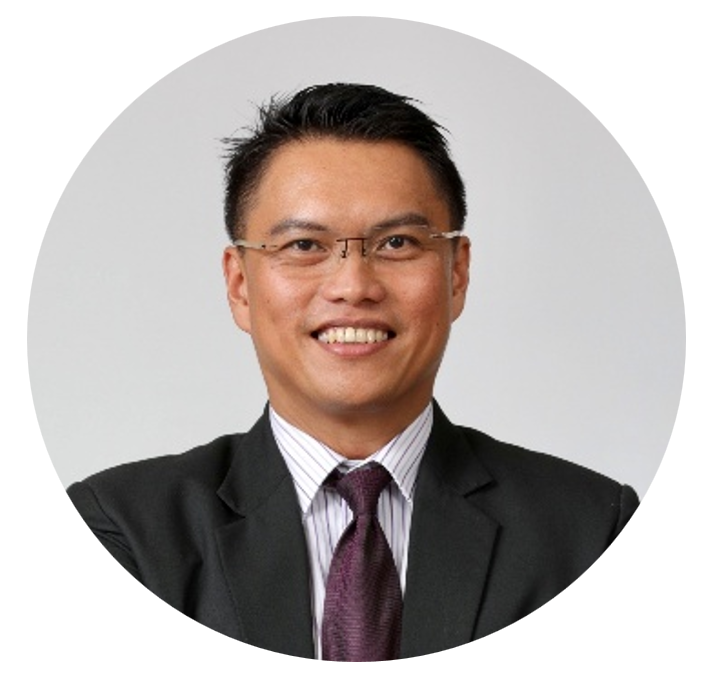
Mr Patrick Tay
Assistant Secretary-General, National Trades Union Congress (NTUC)
Member of Parliament, Pioneer Single Member Constituency
Keynote: Future-Ready and Future Forward Adult Education
This keynote will examine the development of Continuing Education and Training (CET) in Singapore over the past decade, with particular attention to the opportunities presented by the newly merged SkillsFuture Singapore (SSG) and Workforce Singapore (WSG) entity. It will distil the key success factors that have enabled and sustained Singapore’s achievements in the adult CET space, including system-wide coordination, policy coherence, industry responsiveness, and a strong commitment to lifelong learning. At the same time, it will consider how these strengths can be maintained and strengthened amidst the velocity of change and developments across the globe in terms of jobs, skills, and technology, particularly in relation to digitalisation and artificial intelligence (AI). In response to this shifting landscape, the keynote will also explore strategies and ideas for building a CET system that is not only future-ready in responding to emerging demands, but also future-forward in anticipating change driving innovation and equipping adult learners to thrive in an increasingly complex and dynamic world.
Mr Patrick Tay is the Assistant Secretary-General of NTUC and Member of Parliament of Pioneer Single Member Constituency. He co-chairs the Financial Sector Tripartite Committee. As Director of NTUC’s Legal Services and Strategy Departments, he represents the Labour Movement in tripartite workgroups to review/update employment and industrial relations legislation and has been pivotal in lobbying for the many changes to manpower related laws and policies in Singapore. He also co-chaired the NTUC-Singapore National Employers Federation (SNEF) Professional Managerial Employees (PME) Taskforce and is the Executive Secretary for the United Workers of Electronics & Electrical Industries. As legal adviser to NTUC-affiliated unions in Singapore, he has advised/represented numerous unions/members in complex and contentious issues, dispute resolution, conciliation and in the Industrial Arbitration Court.