COLLOQUIUM BY NICE
Title: Labour market indicators in Singapore : Is the current state providing sufficient policy visibility?
Synopsis: Apart from economic growth, standard measures such as employment growth, unemployment, labour force participation, job vacancies and retrenchments serve as key indicators of labour market health in Singapore. The amount of information captured in an array of such indicators is smaller than than the number of indicators observed because they are not totally independent of one another. More generally, what is the state of such indicators for Singapore's labour market and is there scope for increasing the number and type of indicators that would aid in improving the visibility of where the labour market is heading? An area of particular interest is skills acquisition and development: are existing indicators of training achievements adequate for assessing the success of major policy initiatives, most notably SkillsFuture? And in an era where AI disruption is top of policymakers', business leaders' and workers' concerns, are there measures of skills conditions which can show how the workforce is doing in terms of AI preparedness and where the gap are? In this colloquium, the SUSS team that worked with the Ministry of Manpower and Burning Glass Institute on the development of the Singapore Opportunity Index will discuss these and other questions from the perspective of the value that a new indicator such as the SOI brings to improving policy visibility.
Presenters
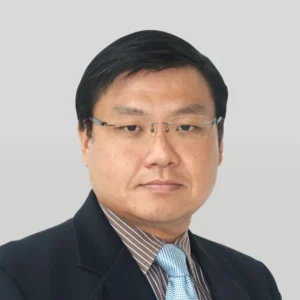
Dr Kang Soon-Hock
Director, University Research Office
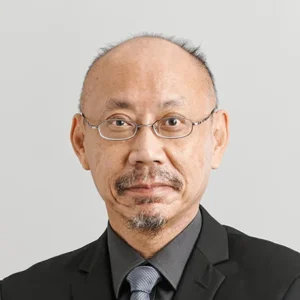
Dr Randolph Tan
Director, Node for Impactful Continuing Education (NICE) and Associate Professor, Business Programme, School of Business
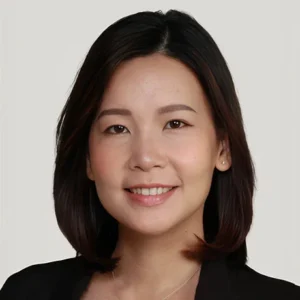
Dr Sheryl Chua
Head, Public Safety and Security Programme, School of Humanities and Behavioural Sciences
COLLOQUIUM BY UWK, ULM AND TLC
Participating Institutions and Organisations
Title: Intergenerational Learning: Reframing Generations, Learning, and Societal Impact
Synopsis: As societies confront increasingly complex challenges, such as demographic change, workforce transformation, technological disruption, and social fragmentation, there is growing recognition that sustainable responses require learning across generations, rather than learning designed for separate generations. Intergenerational learning (IGL) has therefore attracted increasing attention across education, community development, and workforce learning. Yet IGL is understood in varied ways and mobilised for different purposes across institutional and disciplinary contexts.
This international colloquium brings together researchers from the University for Continuing Education Krems (UWK), Austria’s Agency for Education and Internationalisation (OeAD), Ulm University, and the Singapore University of Social Sciences (SUSS) to examine different interpretations, purposes, and enactments of IGL. Moving from situated examples and designed practice to a broader synthesis of the higher education literature, the colloquium explores how different institutional contexts conceptualise and enact intergenerational learning, while considering what these diverse approaches reveal about its forms, functions, and possibilities.
Each institution offers distinct but complementary perspectives on intergenerational learning. UWK and OeAD examine two Austrian educational initiatives as potential settings for intergenerational learning, asking what “generation” means in each context, how the initiatives create conditions for learning from, with, and about other generations, and how such learning unfolds in practice. Ulm University presents its didactic concept of Intergenerational Learning by Design, offering a conceptual framework and practical insights. The approach enables generations to learn from, with, and about one another — challenging stereotypes, fostering reciprocal exchange of knowledge and competencies, and promoting critical reflection on intergenerational relations. Established practice-based projects are showcased. SUSS presents IGL as a pedagogical process that leverages generational diversity in adult learning classrooms. Drawing on a meta-synthesis of higher education research, the presentation examines how IGL is conceptualised, designed, and enacted, as well as the educational outcomes it generates.
The discussant response will bring the three contributions into conversation and push the debate further by asking: What, precisely, makes learning genuinely intergenerational? What forms of difference become visible – or disappear – when we think through generations? Are we too quick to assume that intergenerational learning is inherently valuable? These tensions will open up a critical debate about the field’s future in the light of contemporary societal challenges.
Presenters

Isabell Grundschober

Karmen Mlinar
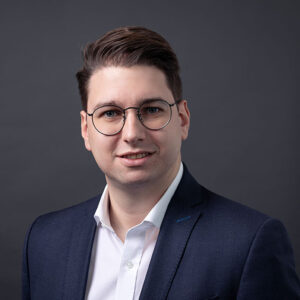
Patrick Reisinger
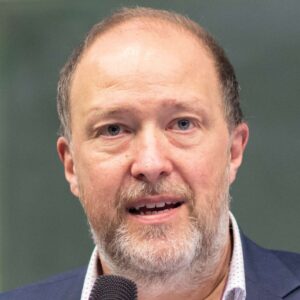
Markus Marquard
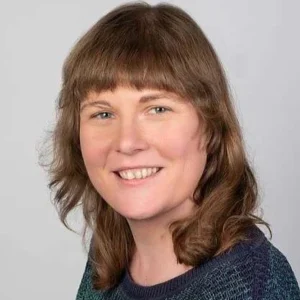
Dorothee Hoffmann
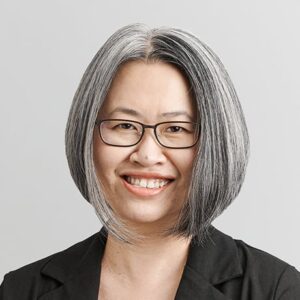
Ho Yan Yin